Buy Solar Panels in Pakistan: On-Grid vs Off-Grid in 2026
Deciding to buy solar panels in Pakistan is easy; deciding which type of system to build is where most people get stuck. On-grid, off-grid, and hybrid systems each solve a different problem, and picking the wrong one means either overspending on batteries you don’t need or losing power during outages you could have avoided. This 2026 guide explains the three system types in plain language, shows you which panels and accessories each one needs, and helps you match a system to your budget and load.
By the end, you will know exactly what to order and why, whether you live in a city with reliable grid supply or a rural area with frequent outages.
On-Grid, Off-Grid, and Hybrid: The Core Difference
Every solar system falls into one of three categories, defined by its relationship with the national grid.
- On-grid (grid-tied): Connected to the grid, no batteries. Surplus power is exported through net metering. Cheapest and fastest payback, but shuts down during load-shedding.
- Off-grid: Fully independent, powered by panels and batteries only. No grid connection needed, ideal for remote areas, but requires a large, expensive battery bank.
- Hybrid: Connected to the grid and equipped with batteries. Runs essential loads during outages and still exports surplus. The most flexible and increasingly popular choice.
Your choice depends on grid reliability, budget, and how much backup you need. When you buy solar panels in Pakistan, the panels themselves are the same across all three types; the difference lies in the inverter and whether you add a battery bank.
Which system is right for you?
If your area has decent grid supply and you mainly want to cut bills, on-grid is the smart, low-cost choice. If you face daily hours-long outages, hybrid gives you savings plus backup. If there is no grid at all, off-grid is your only option. Be honest about your load and your tolerance for blackouts before deciding.
Comparing the Three System Types
The table below summarises the trade-offs so you can see them at a glance.
| Feature | On-Grid | Off-Grid | Hybrid |
|---|---|---|---|
| Batteries needed | No | Yes (large bank) | Yes (smaller bank) |
| Works during outage | No | Yes | Yes |
| Net metering | Yes | No | Yes |
| Upfront cost | Lowest | Highest | Medium–high |
| Best for | Cities with grid | Remote areas | Frequent outages |
Notice that batteries are the biggest cost driver. Every battery you add improves resilience but lengthens payback, so size the bank to your genuine backup needs rather than emotion.
Choosing the Right Panels for Your System
Panels are the heart of any system, and 2026 offers excellent options. Monocrystalline modules dominate the market thanks to their high efficiency and strong performance in Pakistan’s heat. Bifacial panels, which capture reflected light from both sides, are gaining traction for ground mounts and light-coloured rooftops.
Focus on three panel metrics:
- Efficiency: Higher efficiency produces more power per square metre, valuable on small roofs.
- Temperature coefficient: A lower value means the panel loses less power on hot days, which matters enormously in our climate.
- Warranty: Look for a 25-year performance warranty and a solid product warranty.
For guidance on how panel efficiency and temperature behaviour are tested, the U.S. Department of Energy publishes homeowner resources that explain the fundamentals in accessible terms. Understanding these numbers helps you avoid overpaying for marginal gains.
How many panels do you need?
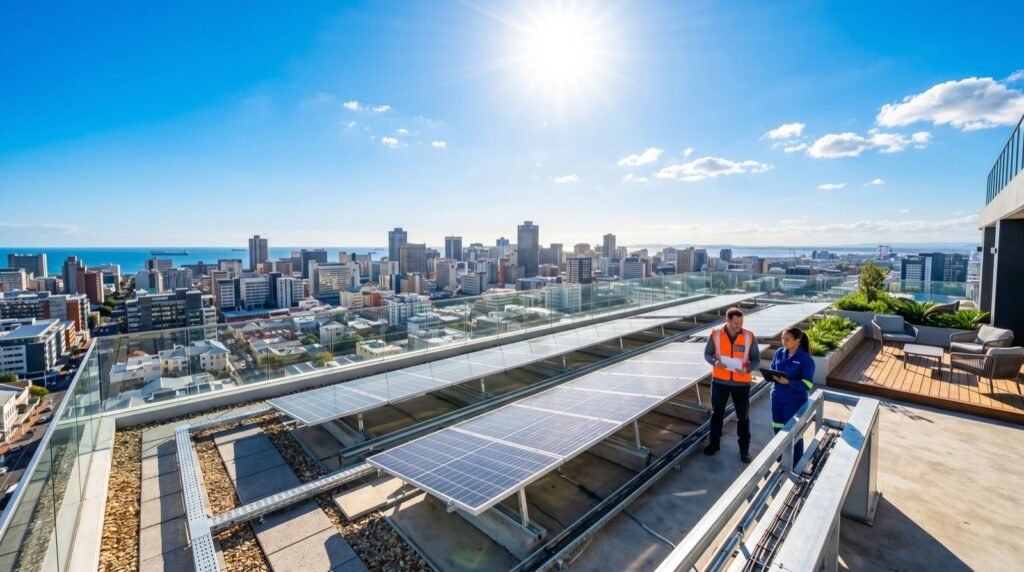
Divide your target daily generation by the effective output of one panel. A 5 kW system typically uses ten to twelve panels of 450–550 W. A good supplier will size the array to your roof space and consumption, and provide a string layout that keeps voltages within your inverter’s window.
Don’t Forget the Accessories
A system is only as good as its weakest component, and cheap accessories are a frequent point of failure. Beyond panels and the inverter, you need a mounting structure engineered for wind loads, correctly sized DC and AC cables, MC4 connectors, fuses, breakers, surge protection, and proper earthing.
When you shop for solar accessories in Pakistan, resist the urge to save money on protection devices. Surge arresters and quality breakers cost a fraction of your panels but protect the entire system from voltage spikes and lightning, both common across the country. Undersized cables, meanwhile, waste energy as heat and can become a fire risk.
Accessory priorities
- Mounting structure: Galvanised or aluminium, rated for local wind speeds.
- Cabling: Correct cross-section to minimise voltage drop.
- Protection: DC/AC breakers, fuses, and surge protection devices.
- Monitoring: A Wi-Fi dongle so you can track generation from your phone.
Matching a System to Your Budget
Start with your monthly units and your outage pain. If bills are your main concern and outages are rare, put every rupee into panels and an on-grid inverter for the fastest payback. If outages disrupt your life, allocate part of the budget to a modest battery bank and a hybrid inverter, then expand batteries later.
Working with trusted professionals ensures your components are matched and your system is expandable. Buying a slightly larger inverter than you need today leaves headroom to add panels, batteries, or an EV charger tomorrow without replacing the core hardware.
Frequently Asked Questions
Which is better, on-grid or off-grid, in Pakistan?
For most city homes, on-grid is better because it is cheaper and qualifies for net metering. Off-grid suits remote locations with no grid access. If you face frequent load-shedding but have a grid connection, a hybrid system offers the best of both.
How many solar panels do I need for a home?
It depends on your consumption. A typical home needs a 5–10 kW system, which is roughly ten to twenty-four panels of 450–550 W. Size the array to your monthly units and available roof space for the best return.
Are batteries necessary for a solar system?
Only for off-grid and hybrid systems. On-grid systems use the grid instead of batteries via net metering. Add batteries only if you need backup during outages, since they are the most expensive part of any system.
What accessories should I never skimp on?
Never economise on the mounting structure, cabling, and protection devices. These ensure safety and efficiency. A weak structure or undersized cable can damage your entire investment and even create a fire hazard.
Final Thoughts
The decision to buy solar panels in Pakistan pays off most when you choose the right system type and back it with quality accessories. Match on-grid, off-grid, or hybrid to your grid reliability and budget, invest in efficient panels suited to our heat, and never cut corners on protection. Plan for expansion, work with reputable suppliers, and your solar system will deliver clean, affordable power for decades to come.