Net Metering in Pakistan 2026: How to Slash Your Electricity Bill With Solar
Net metering has quietly become the single biggest reason homeowners invest in solar panels in Karachi and across the country. In simple terms, net metering lets your rooftop system export surplus daytime electricity back to the grid, spinning your meter backwards and turning sunshine into credit on your bill. In 2026, with tariffs climbing and load-shedding still a fact of life, understanding how net metering works is the difference between a smart investment and an expensive misunderstanding.
This guide walks you through the mechanics, the paperwork, the real numbers, and the mistakes people make so you can approach solar with confidence.
What Net Metering Actually Means
Under a net metering agreement, a bi-directional meter records two things: the units you draw from the grid and the units you push back into it. At the end of the billing cycle, the utility nets one against the other. If you exported more than you imported, you carry forward a credit.
Pakistan’s framework is regulated by the National Electric Power Regulatory Authority (NEPRA), which introduced the net metering regulations that distribution companies like K-Electric, LESCO and IESCO now administer. The scheme is open to consumers on a three-phase connection, typically with sanctioned loads from 1 kW up to 1 MW.
Gross Metering vs Net Metering
People often confuse the two. Gross metering pays you a fixed feed-in tariff for every unit exported, regardless of what you consume. Net metering instead offsets your consumption first and only credits the surplus. For most Pakistani households, net metering delivers a stronger return because retail tariffs are higher than any feed-in rate.
The Numbers: What a Typical System Saves in 2026
Let’s ground this in real figures. The table below compares three common residential system sizes and their approximate impact for a grid-tied home.
| System Size | Daily Units (avg) | Est. Monthly Savings (PKR) | Typical Payback |
|---|---|---|---|
| 5 kW | 20–24 units | 28,000–34,000 | 3–4 years |
| 10 kW | 40–48 units | 55,000–68,000 | 3–4 years |
| 15 kW | 60–72 units | 82,000–100,000 | 2.5–3.5 years |
Actual savings depend on your tariff slab, roof orientation and how much you consume during daylight hours. A home that runs air conditioning and appliances while the sun is up captures more value than one that consumes mostly at night.
Step-by-Step: Getting a Net Metering Connection
The application process is more straightforward than most people fear. Here is the sequence in order:
- Size and install your system. Work with a certified installer to design a system matched to your sanctioned load.
- Prepare documents. You need a valid CNIC, a recent electricity bill, and your system’s technical drawings.
- Submit the application to your distribution company along with the equipment datasheets.
- Site inspection. The utility verifies your installation meets safety and interconnection standards.
- Meter installation. A bi-directional meter replaces your old one.
- Agreement signing. You sign a net metering agreement, typically valid for several years and renewable.
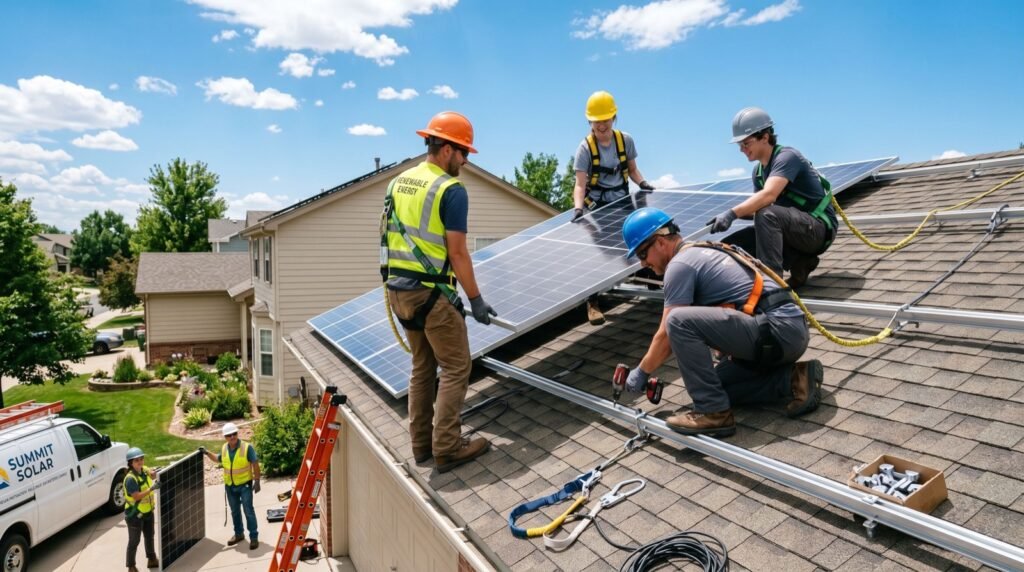
From start to finish, the process usually takes four to eight weeks depending on how responsive your provider and utility are. Choosing dependable installers such as dependable specialists keeps the paperwork moving and prevents costly rework.
Common Mistakes to Avoid
- Oversizing beyond your sanctioned load. NEPRA rules cap your inverter capacity relative to your connection. Exceeding it stalls approval.
- Skipping the inspection prep. Loose earthing or non-compliant wiring is the top reason inspections fail.
- Cheap inverters. A net metering inverter must have anti-islanding protection. Bargain units often lack proper certification.
- Ignoring shading. Even partial shade on a string can cut output dramatically. A proper site survey catches this early.
Why Location and Installer Quality Matter
Solar irradiance in Pakistan is exceptional. According to the International Renewable Energy Agency (IRENA), the country receives among the highest annual solar exposure in the region, which means well-designed systems reliably outperform conservative estimates.
Still, the hardware is only half the story. A rushed installation with mismatched components will underperform in any city. Whether you are comparing quotes from a solar company in Quetta or a metro installer, prioritise transparent load calculations, tier-1 panels and a written performance warranty over the lowest headline price.
How Net Metering Interacts With Rising Tariffs in 2026
The financial logic of net metering strengthens every time the grid tariff rises. When you export a unit at midday and later import a unit at night, the credit protects you from the sting of higher rates. Because Pakistan’s electricity prices have trended upward for several years, homeowners who installed early are now enjoying credits worth far more than they anticipated at the time of installation.
This is why waiting for prices to “settle” is usually a losing strategy. The sooner you lock in a system, the more billing cycles you benefit from, and the faster your payback arrives. Solar effectively hedges you against future tariff hikes for the next 25 years.
Seasonal Credit Banking
Another underappreciated advantage is seasonal balancing. During cooler months when your air conditioning is idle, your system often exports a large surplus. Those credits carry forward and cushion the heavy consumption of peak summer. In practice, a well-sized system smooths your annual bill into something far more predictable than the roller-coaster of grid-only billing.
Documents and Timeline Recap
To keep expectations realistic, here is what a smooth net metering journey looks like in practice. Prepare your CNIC, the latest paid bill, ownership proof and the system’s single-line diagram in advance. Once submitted, the distribution company schedules an inspection, then installs the bi-directional meter, and finally executes the agreement. Applicants who assemble paperwork early routinely complete the process weeks faster than those who scramble document by document.
Keep copies of every signed page. When you eventually sell your home, a documented net metering agreement is a genuine value-add that appeals to energy-conscious buyers.
Frequently Asked Questions
Is net metering worth it in 2026?
Yes. With grid tariffs rising and payback periods for quality systems now sitting around three to four years, net metering remains one of the most reliable investments a Pakistani homeowner can make. The credits you accumulate offset expensive peak-hour consumption.
Do I get paid cash for the extra units I export?
Not directly. Surplus units become credits that offset future imports rather than a cash payout. At year-end, distribution companies settle the remaining balance according to NEPRA’s approved rate, which is lower than the retail tariff.
Can I add batteries to a net metering system?
You can, but pure net metering systems are grid-tied without storage. Adding batteries creates a hybrid setup that keeps critical loads running during outages while still exporting surplus. Expect a higher upfront cost for the added resilience.
What size system do I need?
Size your system around your daytime consumption and sanctioned load. A 5 kW system suits a modest home, while larger houses with air conditioning often need 10 kW or more. A proper site survey gives you the exact figure.
Conclusion
Net metering turns your roof into a revenue-offsetting asset, and in 2026 the economics are stronger than ever. With the right system size, certified equipment and a smooth NEPRA application, payback arrives in just a few years and savings continue for decades. If you are ready to lock in lower bills, request a free site assessment from a trusted local installer and take the first step toward energy independence today.